
By Alex Bradford Cobb | Published: 9/28/26 | Last updated: 9/28/26
Fudge is a sugar-based confection made from butter, sugar, and milk — cooked to the soft-ball stage (235–240°F), then beaten as it cools to create the microscopic sugar crystals that give real fudge its smooth, dense, velvety texture. When it's made correctly, it's one of the most satisfying things you can eat. When it's made incorrectly — or when it's mass-produced with vegetable oil shortcuts — it's something else entirely.
At Uranus Fudge Factory & General Store, we've been making fudge the right way in our on-site kitchen in St. Robert, Missouri since 2015. This is everything you need to know about fudge — how it's made, what makes it good, the classic flavors worth knowing, and where to get the best fudge you've ever tasted without turning on a stove.
Shop Uranus fudge: UranusGeneralStore.com/fudge-from-uranus/ | Ships nationwide and internationally
What Is Fudge?
Fudge is an American confection — invented in the late 1880s, according to most food historians, and popularized at women's colleges in the 1890s where students made it in their dorms. The name likely comes from "fudging" — improvising or making do — which is what the early batches were: happy accidents that turned out better than expected.
The chemistry is precise even if the origin story isn't. Fudge is made by dissolving sugar in a mixture of butter and cream or milk, then cooking it to a specific temperature. At the soft-ball stage (235–240°F), the sugar solution has concentrated enough that when it cools and is beaten, it forms tiny sugar crystals rather than large ones. Large crystals make grainy fudge. Tiny crystals make smooth fudge. The difference between excellent fudge and mediocre fudge comes down to controlling that crystallization.
This is why real fudge is genuinely difficult to make well — and why the shortcut versions that replace butter and cream with vegetable oil produce something that looks like fudge but tastes like a compromise.
What Makes Great Fudge?
Four things separate genuinely excellent fudge from the mass-produced version:
Real dairy. Butter and cream or whole milk are the foundation of proper fudge. They provide the fat that gives fudge its richness and the proteins that contribute to its texture. Vegetable oil substitutes cut the cost and the quality simultaneously.
Temperature precision. Cooking to exactly the soft-ball stage — not under, not over — is the critical step. Under-cooked fudge doesn't set. Over-cooked fudge becomes grainy. The window is narrow and requires attention.
Proper beating. Once the fudge cools to around 110°F, it needs to be beaten — worked vigorously until it loses its gloss and starts to thicken. This is what breaks the sugar into microscopic crystals. Beat too early and the crystals are too large. Beat too late and the fudge sets before it can be worked. Timing matters.
No shortcuts. The best fudge has a short ingredient list: sugar, butter, cream or milk, flavoring. Marshmallow cream, corn syrup, and artificial thickeners are the shortcuts that produce a different — and lesser — product. They're easier to control, which is why they're used in commercial production. They're not better, which is why homemade fudge made the traditional way is so different from what you find in most stores.
Types of Fudge
Classic Chocolate Fudge
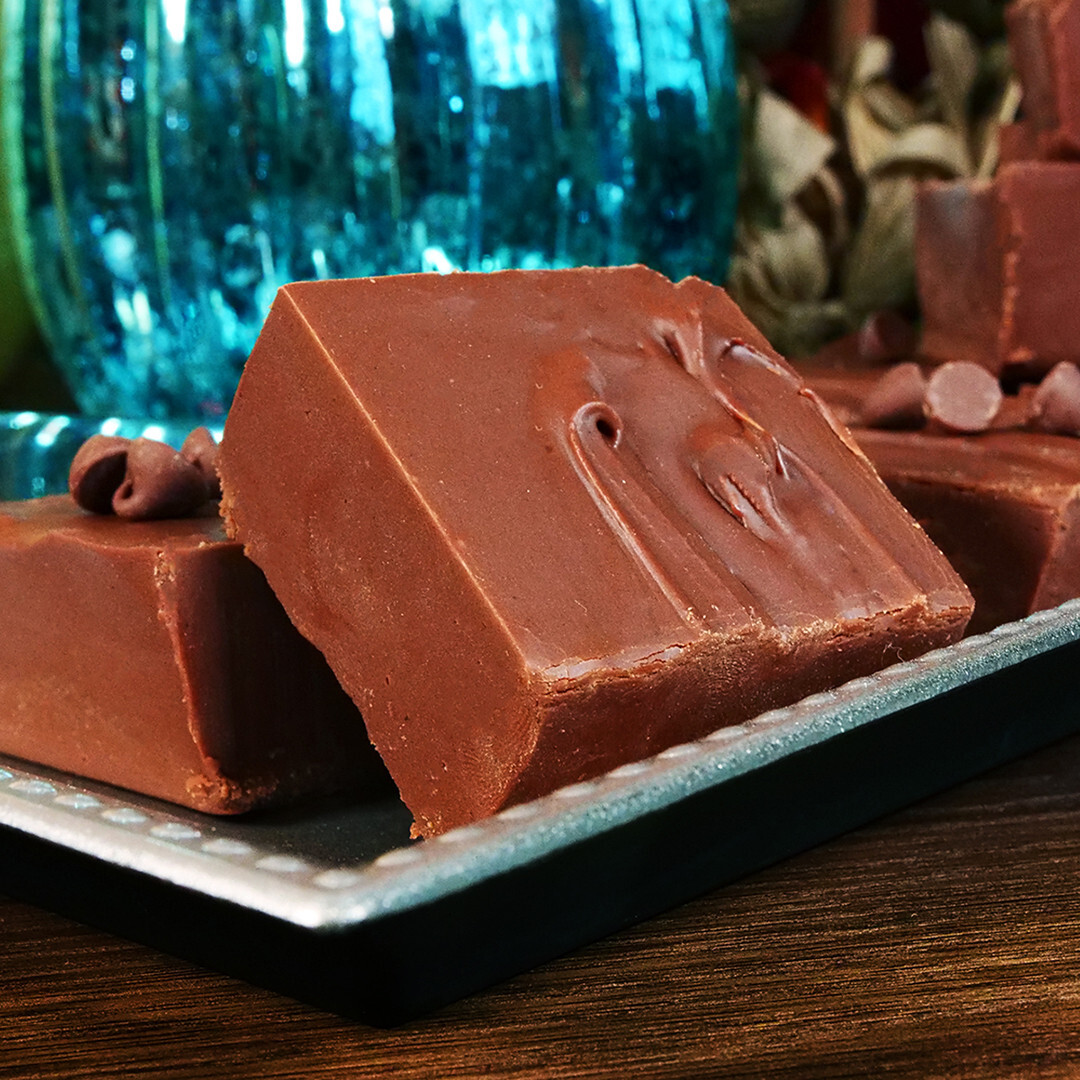
The original and still the standard against which all fudge is measured. Cocoa or melted chocolate is added to the base mixture, giving the fudge its characteristic deep, rich flavor. The quality of the chocolate matters — better chocolate produces better fudge.
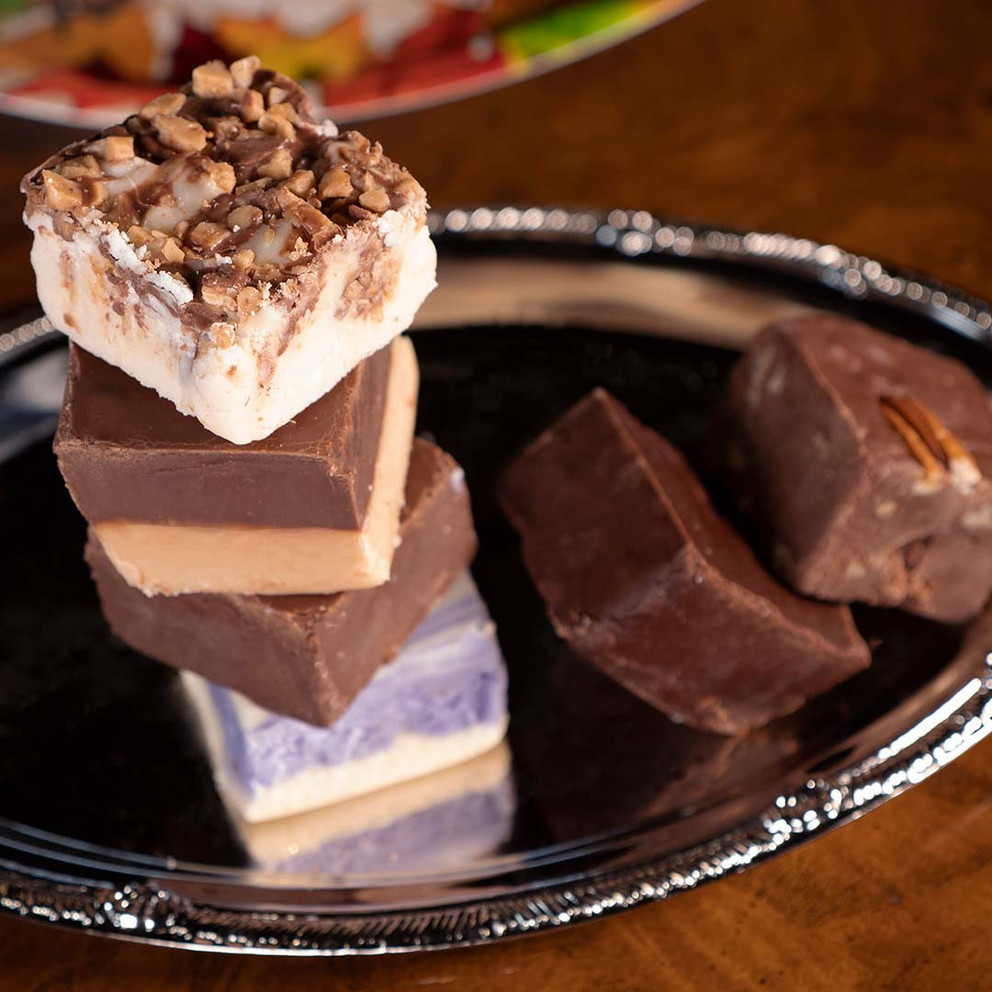
At Uranus, the classic chocolate lineup includes Chocolate, Dark Chocolate, and Chocolate Pecan (with substantial pecan pieces for texture). Zackary Hoskins, Fudgepacker at the Uranus Fudge Factory, calls Chocolate Pecan one of the "Mammy and Pappy flavors" — old-school, proven, and the one the older generation reaches for first.
Peanut Butter Fudge
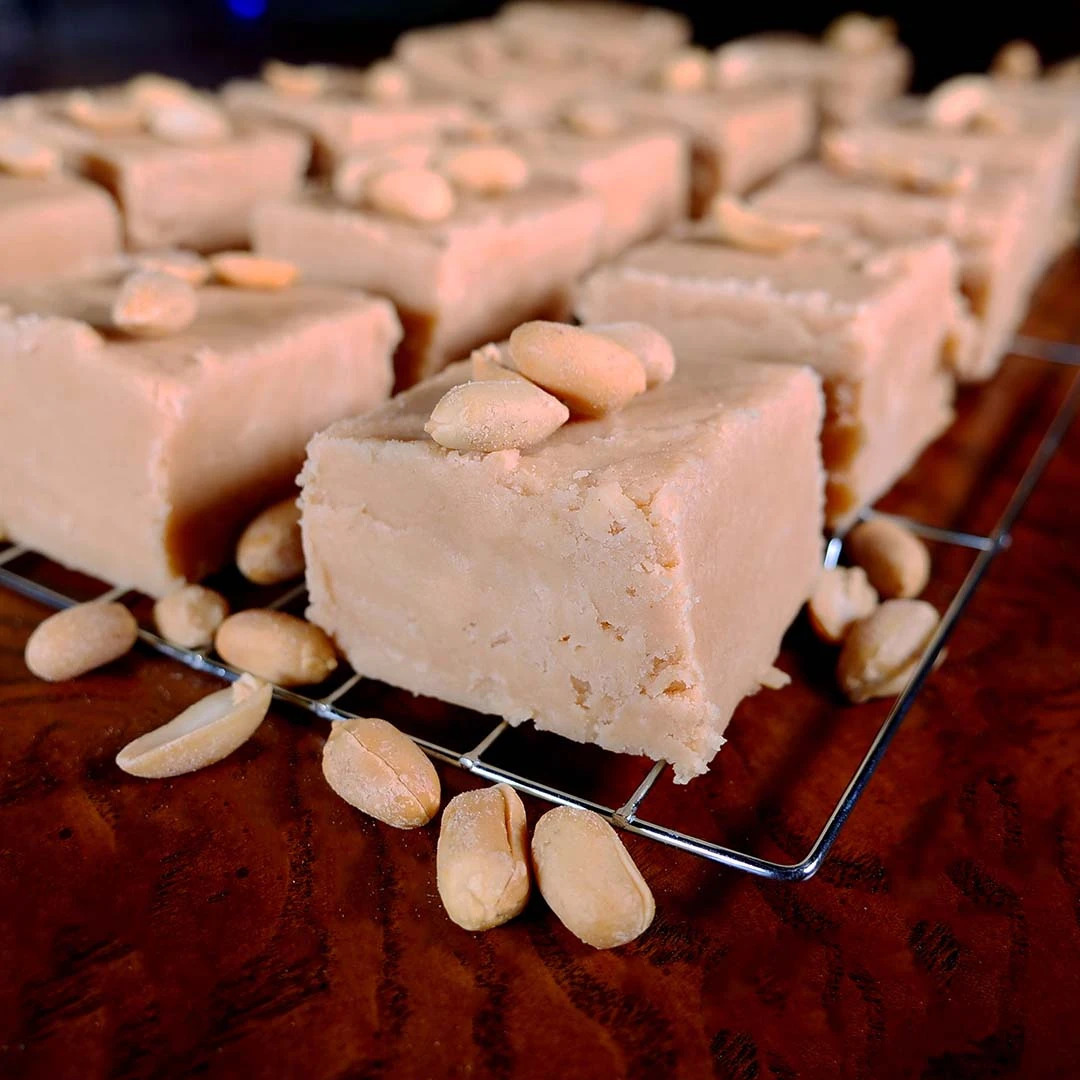
Peanut butter fudge replaces or supplements the chocolate base with peanut butter, producing a dense, salty-sweet confection that's one of the most popular fudge flavors in America. At its best, it's smooth, rich, and intensely peanut-forward without being cloying.
The key to good peanut butter fudge is balance — the peanut butter needs to be fully incorporated into the sugar base without overwhelming the fudge's texture. Too much and it becomes dense and heavy; too little and the peanut butter flavor disappears into the sweetness.
Uranus makes both straight Peanut Butter Fudge and Peanut Butter Chocolate Fudge — what Zachary calls "two all-time greats combined in one wonderful fudge." Both are available year-round and ship nationwide.
Peanut Butter Chocolate Fudge
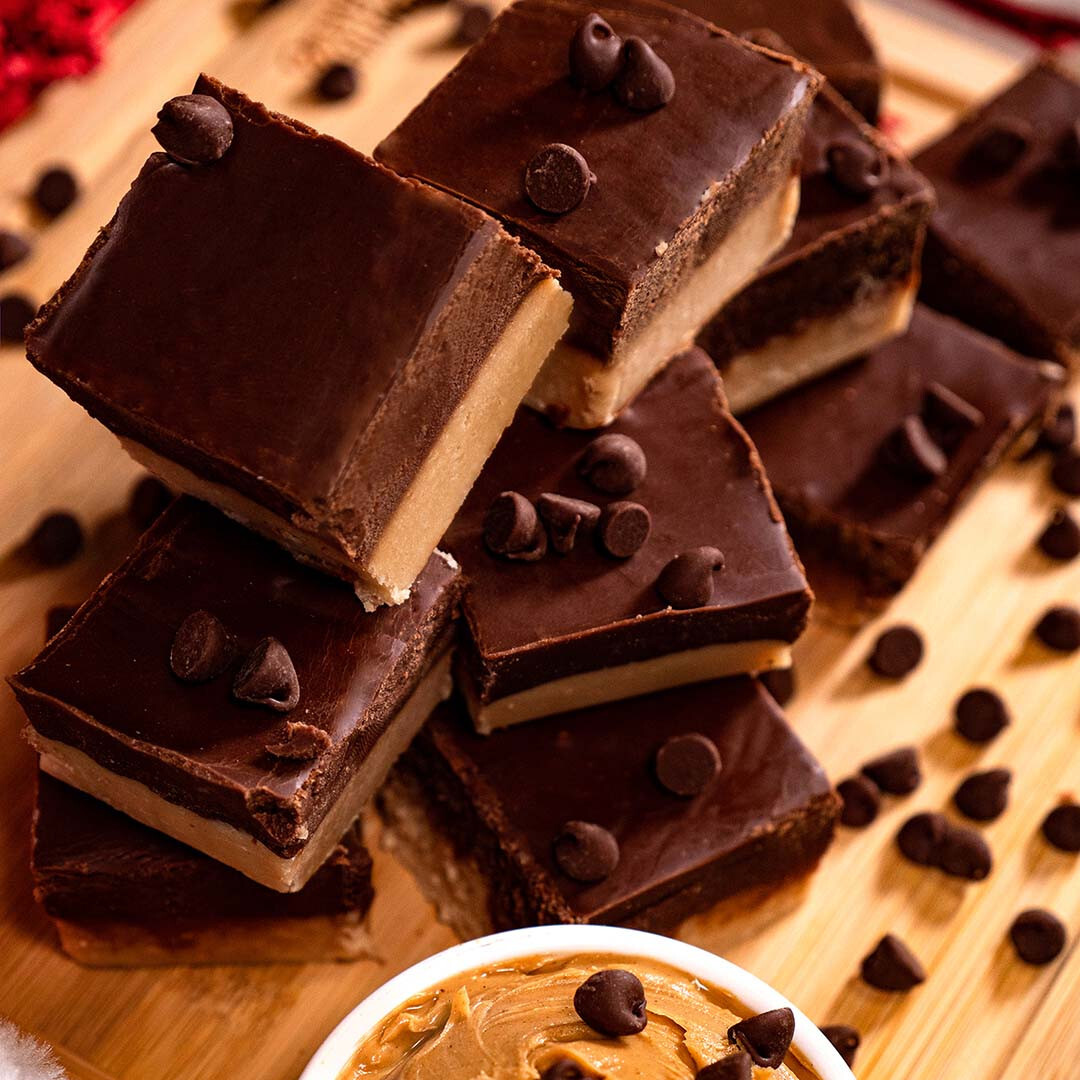
The combination that doesn't need explaining. Peanut butter and chocolate have been a correct flavor pairing since before anyone alive can remember. In fudge form, the combination produces something richer than either flavor alone — the peanut butter adds salt and depth, the chocolate adds bitterness and complexity.
This is the flavor that disappears fastest from any Uranus sampler box.
Fantasy Fudge
Fantasy fudge is a specific style of fudge made with marshmallow cream — a shortcut technique developed in the mid-20th century that produces a reliably smooth result with less temperature precision required. The original Fantasy Fudge recipe appeared on the back of a Kraft Jet-Puffed Marshmallow Cream jar and became one of the most reproduced fudge recipes in American cooking.
It's easier to make than traditional fudge and forgiving of beginner mistakes. The tradeoff is a slightly different texture and flavor profile than fudge made the traditional way — marshmallow cream adds sweetness and a lighter body that some people prefer and purists notice immediately.
Vanilla Fudge
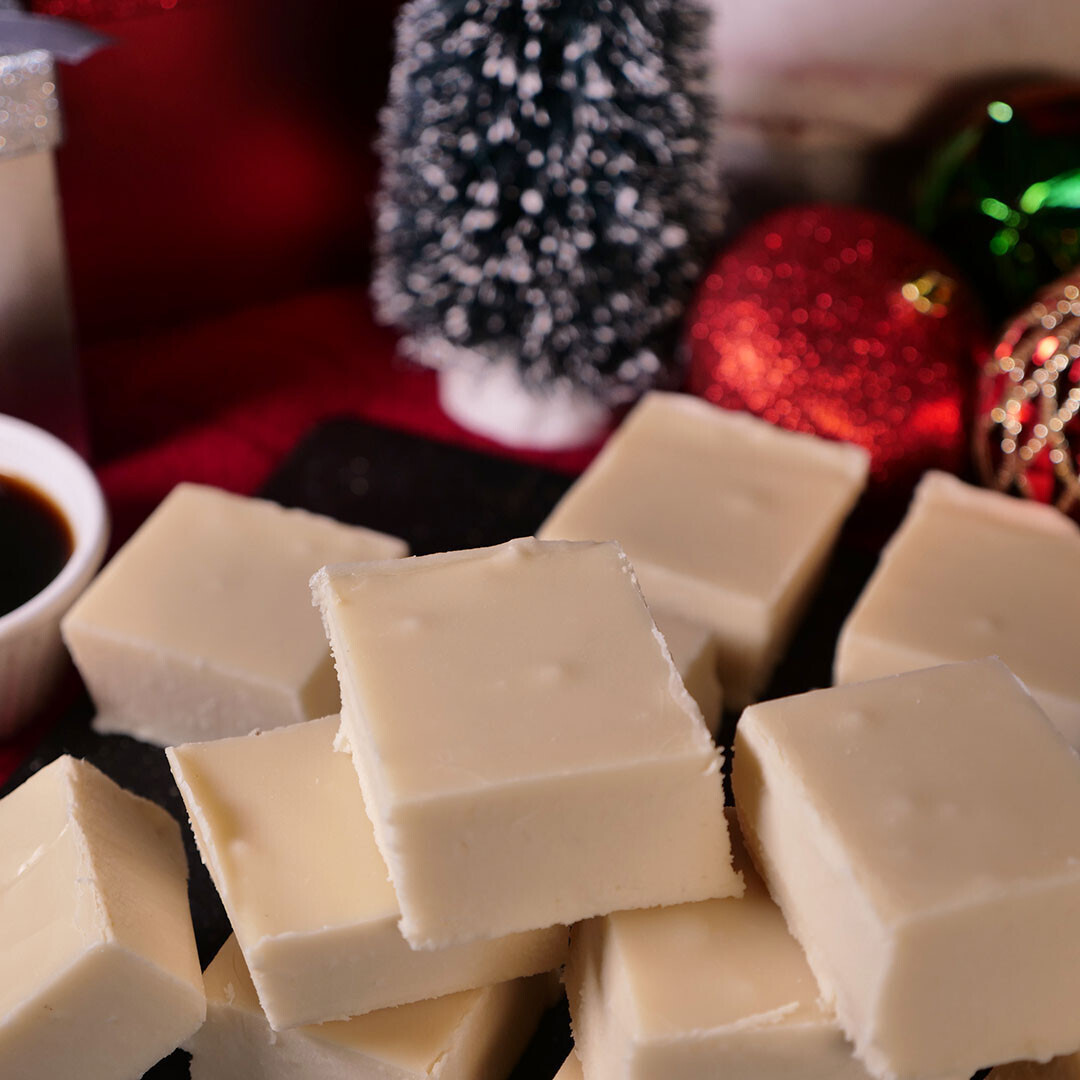
The version that proves fudge doesn't need chocolate to be excellent. Vanilla fudge lets the buttery sweetness of the base shine without the distraction of cocoa, and a good vanilla fudge — made with real vanilla extract rather than artificial flavoring — is as satisfying as the chocolate version.
At Uranus, Vanilla is one of the base flavors that shows up most clearly in the reduced sugar lineup as well.
Specialty and Seasonal Flavors
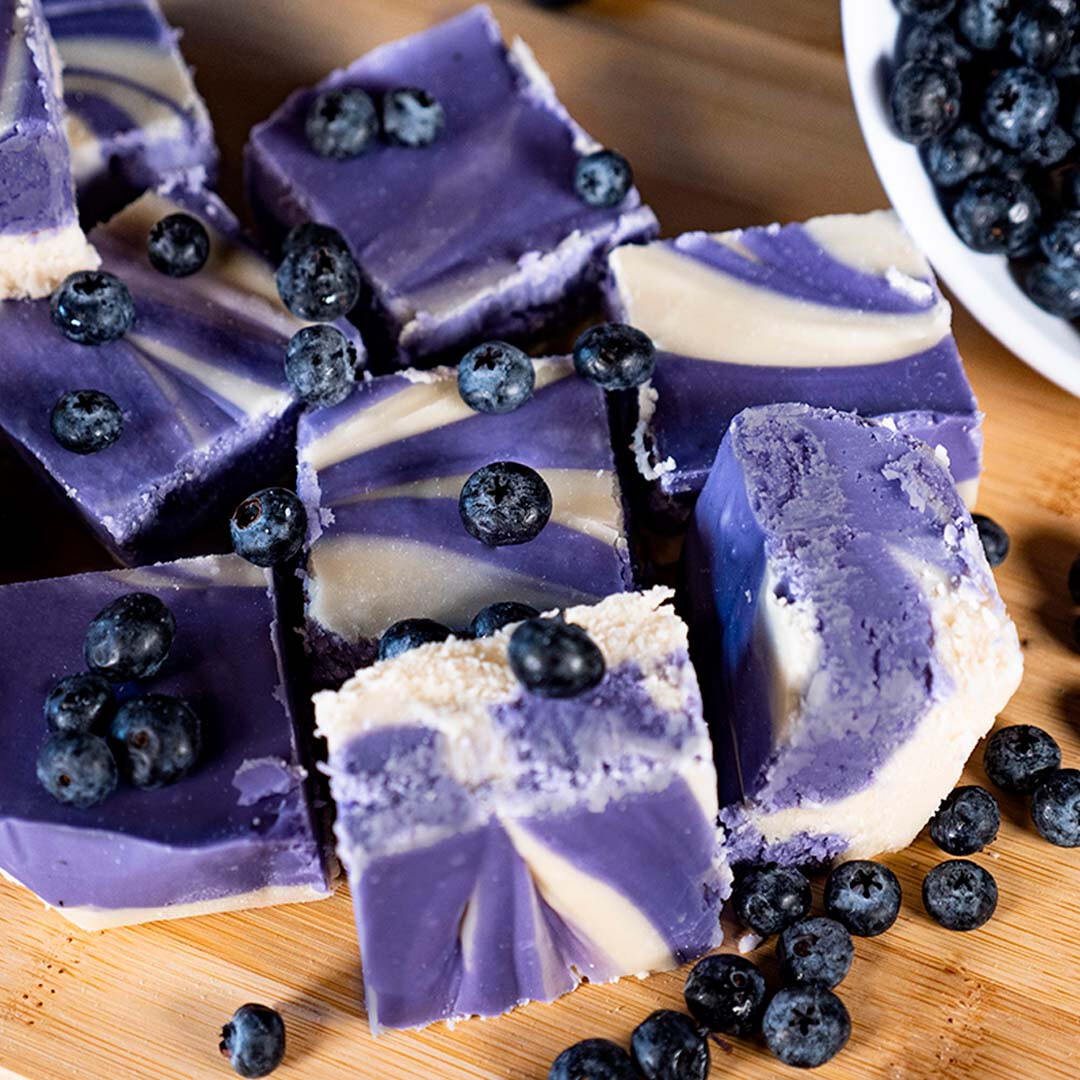
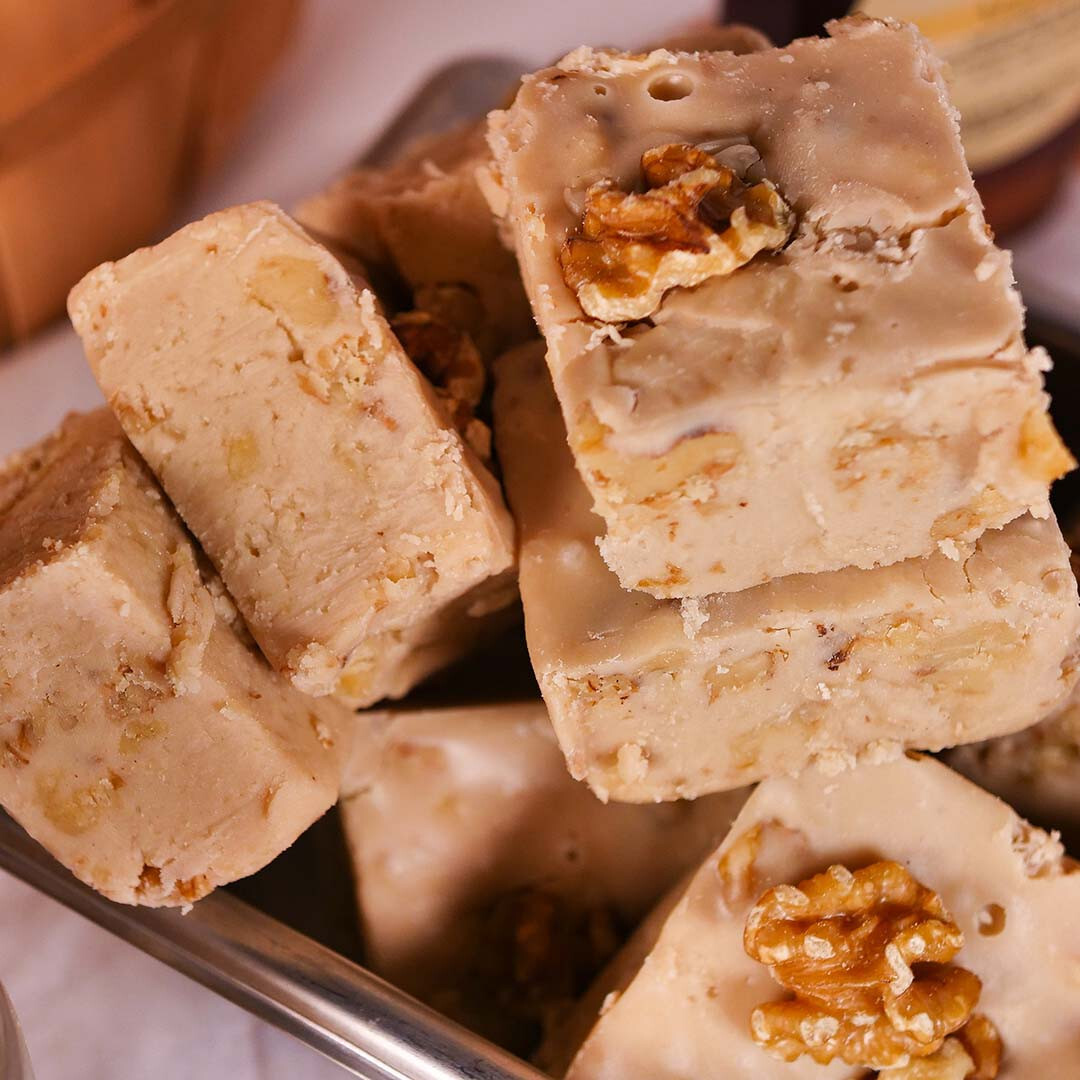
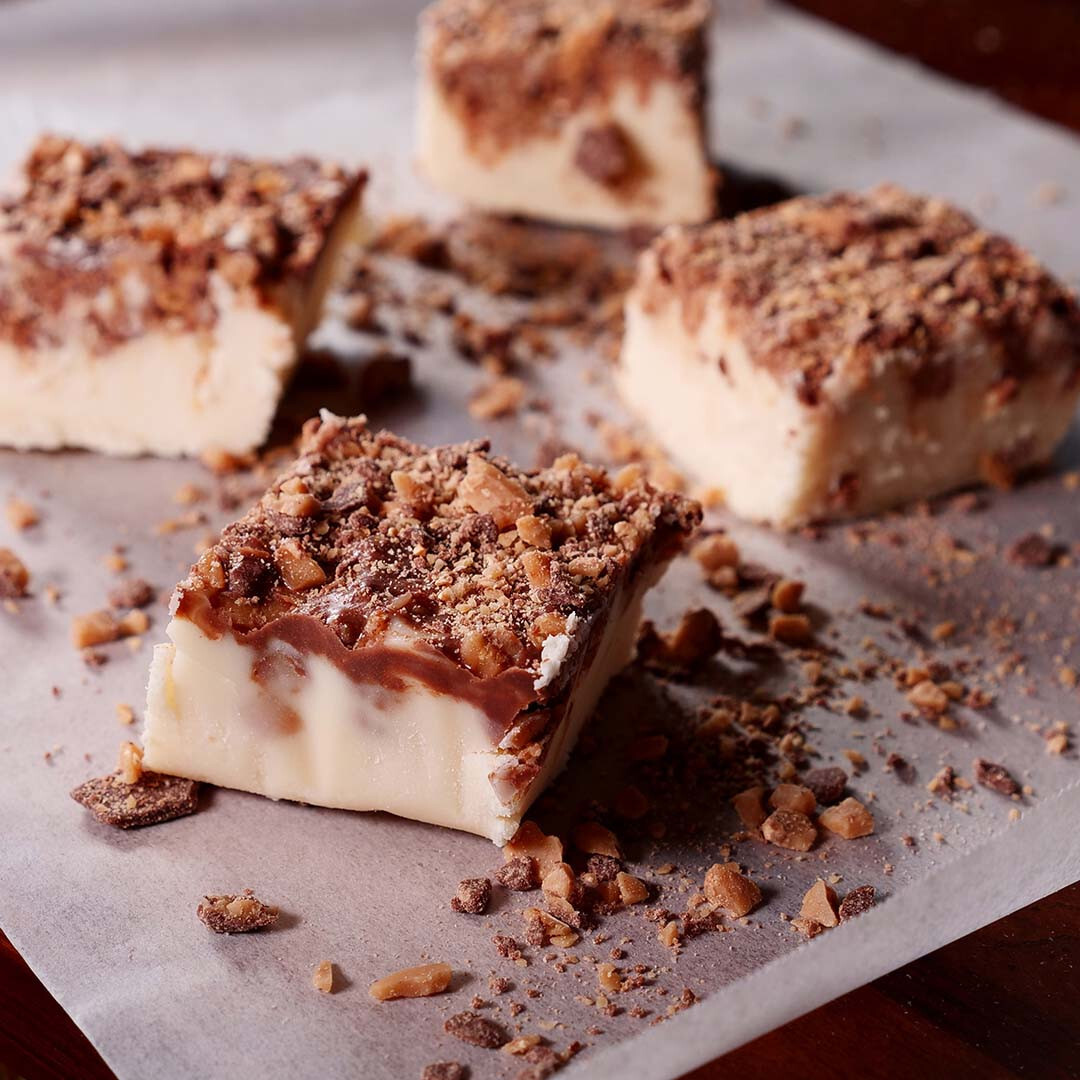
The fudge flavor spectrum extends well beyond the classics. Uranus makes nineteen flavors, including Blueberry Cheesecake (Zackary's personal favorite — "I would take this to my grave"), Raspberry Vanilla, Toffee Bar (with Heath toffee pieces), Cookies & Cream, M&M, Maple Walnut, Rocky Road, and a rotating Fudge of the Month.
The specialty flavors work because the fudge base is solid enough to carry them — a weak base means the add-ins are doing all the work. A strong base means the combination is greater than the sum of its parts.
Browse all nineteen Uranus fudge flavors →
How to Make Peanut Butter Fudge at Home
If you want to make peanut butter fudge from scratch, here's the traditional method:
Ingredients:
- 2 cups granulated sugar
- ½ cup whole milk
- 1¼ cups creamy peanut butter
- 1 jar (7 oz) marshmallow cream
- 1 teaspoon vanilla extract
Method:
- Line an 8x8 inch pan with parchment paper and set aside.
- Combine sugar and milk in a heavy-bottomed saucepan. Cook over medium heat, stirring constantly, until the mixture reaches 235–240°F (soft-ball stage) on a candy thermometer.
- Remove from heat immediately. Add peanut butter, marshmallow cream, and vanilla extract.
- Stir vigorously until fully combined and smooth.
- Pour into the prepared pan and smooth the top.
- Let cool at room temperature for at least 2 hours before cutting.
Tips for success:
- Use a heavy-bottomed pan to prevent scorching
- Don't stir after the mixture starts boiling — swirl the pan instead
- A candy thermometer is not optional; guessing the temperature produces inconsistent results
- Let it cool completely before cutting or it will crumble
Storage: Room temperature in a sealed container for up to 2 weeks. Freeze for up to 6 months — thaw at room temperature, never in the refrigerator.
How to Store Fudge
Whether you made it or ordered it, storage matters:
Room temperature: Wrap tightly and store in a sealed container, away from heat and direct sunlight. Fresh for up to 2 weeks.
Freezer: Wrap tightly and freeze for up to 6 months. Thaw at room temperature.
Never refrigerate: Fudge absorbs odors from the refrigerator and the texture suffers in the cold. Keep it at room temperature or freeze it — nothing in between.
If it gets too firm: 5 to 7 seconds in the microwave brings it back to near-fresh texture. Don't go longer or it will melt.
Uranus Fudge Factory: The Best Fudge to Order Online
If you want fudge made the right way without making it yourself, Uranus Fudge Factory is the answer. Made fresh in our on-site kitchen in St. Robert, Missouri, in nineteen flavors, with no preservatives and no shortcuts. Orders placed before 7 AM CST Sunday ship Monday morning.
The Taste of Uranus Sampler — 1.5 pounds across six flavors — is the right first order. It covers the classics (Chocolate, Dark Chocolate, Peanut Butter Chocolate), the crowd favorites (Blueberry Cheesecake, Toffee Bar), and the always-present Chocolate Pecan. It arrives in a box that says Uranus on it, which is its own moment.
Summer shipping: Add warm weather protection at checkout between May and September for chocolate-heavy orders.
Three locations to visit in person:
- St. Robert, Missouri — 14400 Hwy Z, off I-44 Exit 163. Open daily 8 AM – 8 PM (CST). On Historic Route 66.
- Anderson, Indiana — 1423 W. 53rd St. Open daily 11 AM – 8 PM.
- Richmond, Indiana — 6400 National Rd. E, I-70 Exit 156B. Open daily 9 AM – 8 PM (EST).
We had someone come in last week and buy fudge and his name was Jacob and he really enjoyed eating the fudge that he bought.
Frequently Asked Questions
What is fudge made of? Traditional fudge is made from sugar, butter, and cream or milk, cooked to the soft-ball stage (235–240°F) and beaten as it cools to produce a smooth, dense texture. Flavorings — chocolate, peanut butter, vanilla, and others — are added to the base. Quality fudge uses real dairy; mass-produced versions often substitute vegetable oils.
What is the soft-ball stage in fudge making? The soft-ball stage is 235–240°F — the temperature at which sugar syrup, when dropped into cold water, forms a soft, pliable ball. Cooking fudge to this exact temperature is the critical step that determines whether it sets correctly.
What is the difference between fudge and chocolate? Fudge and chocolate are different confections. Chocolate fudge contains cocoa, but fudge at its core is a sugar-based candy — butter, sugar, and milk cooked and beaten to create a specific crystal structure. You can make fudge in almost any flavor. Chocolate is a processed cocoa product with its own distinct manufacturing process.
What is peanut butter fudge? Peanut butter fudge is a variety of fudge made with peanut butter incorporated into the sugar and butter base. At its best it's smooth, dense, and intensely flavored. Uranus makes both straight Peanut Butter Fudge and Peanut Butter Chocolate Fudge — the combination Zachary Hoskins calls "two all-time greats combined in one wonderful fudge."
What is fantasy fudge? Fantasy fudge is a style of fudge made with marshmallow cream — a shortcut technique that produces a reliable result without the precise temperature control required by traditional methods. The original recipe appeared on Kraft Jet-Puffed Marshmallow Cream jars and became one of the most widely reproduced fudge recipes in America.
How long does fudge last? Stored at room temperature in a sealed container, fudge stays fresh for up to 2 weeks. Frozen, it keeps for up to 6 months. Never refrigerate fudge — it absorbs odors and the texture suffers.
Where is the Uranus Fudge Factory? The original Uranus Fudge Factory is at 14400 Hwy Z, St. Robert, MO 65584 — on Historic Route 66, off I-44 Exit 163. There are also locations in Anderson, Indiana (1423 W. 53rd St) and Richmond, Indiana (6400 National Rd. E, I-70 Exit 156B). All fudge is also available at UranusGeneralStore.com.
Can I order Uranus fudge online? Yes — nineteen flavors ship nationwide and internationally from UranusGeneralStore.com. Orders placed before 7 AM CST Sunday ship Monday morning. The Taste of Uranus Sampler (1.5 pounds, six flavors) is the recommended first order.

Alex Bradford Cobb is a strapping young man who works for the Mayor in a semi-legal indentured servitude arrangement, similar to how Dubai was built, and possibly the pyramids. What works, works, and there's no need to reinvent the wheel.